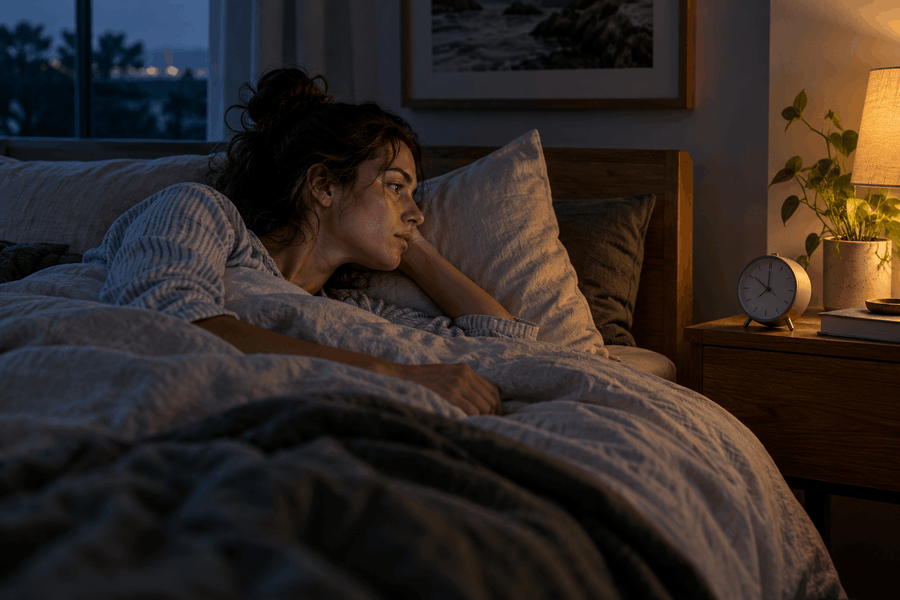
Getting outside in the morning might be the missing piece in your sleep routine. While sleep hygiene tips often focus on what you do at night, emerging research shows that your day actually starts the countdown to rest. Specifically, how soon you’re exposed to natural sunlight after waking can determine how well you sleep that night.
This article unpacks the science behind morning light, its role in regulating circadian rhythms, and how it can directly improve sleep quality and duration.
The Critical Window After Waking
Most people know blue light at night can disrupt sleep. But few realise that the absence of light in the morning can have the same effect. Your body relies on clear signals to time its internal processes. Morning sunlight is the most powerful signal you can give it.
Within the first hour of waking, your eyes send light input to a small brain region called the suprachiasmatic nucleus. This area acts as your body’s master clock. When it receives enough light early in the day, it begins a 14 to 16 hour countdown until your body begins preparing for sleep. If that input is weak or delayed, the clock drifts. Sleep onset becomes harder, and sleep quality often suffers.
What the Research Says
A 2024 study published in the Journal of Health Psychology tracked more than 500 adults using daily diaries. The researchers found a strong link between exposure to sunlight in the early part of the day and sleep outcomes that night. People who received more morning sunlight fell asleep faster, slept longer, and reported better rest.
Interestingly, total hours of daylight exposure throughout the day did not make a difference. It was the timing of light that mattered. Morning light anchored the sleep-wake cycle. Afternoon or evening light had no such effect and could even interfere.
This builds on earlier research showing that light is the main environmental factor that entrains our circadian rhythm. Unlike caffeine or melatonin, light has a direct neurological effect. It resets the internal clock daily, keeping it in sync with the 24-hour cycle.
How Morning Light Resets Your Sleep
Here’s how it works. When morning light hits the retina, it triggers a cascade of biological changes. Cortisol rises, helping you feel alert. At the same time, melatonin—your main sleep hormone—drops. This sets the stage for a natural rise in melatonin later that night.
Without this early light cue, melatonin may not peak until much later, making it harder to fall asleep at a consistent time. You may feel wired at night or sluggish in the morning. Over time, this misalignment can lead to chronic sleep problems, low energy, and even mood disruptions.
The reset effect is strongest when light exposure happens within one hour of waking. It does not need to be direct sunlight, but indoor lighting usually isn’t strong enough to have the same impact. Even a cloudy day outdoors is brighter than most artificial light inside.
How to Use Light to Improve Your Sleep
The most effective strategy is simple: go outside within an hour of waking. This could be a walk, a few minutes on the balcony, or even just standing near a window with the sun in your eyes. Ideally, you do not wear sunglasses for the first few minutes. The goal is to expose your eyes to full-spectrum light, which is needed for the circadian reset.
If you wake before sunrise or cannot access outdoor light, consider using a bright light therapy box. These devices are designed to mimic the intensity and spectrum of morning light. Aim for a device that delivers at least 10,000 lux and use it for 20 to 30 minutes.
Also, avoid bright screens and overhead lights late in the evening. This counteracts the rhythm set in the morning and can shift your clock forward again.
Why It Matters for Long-Term Health
Getting morning sunlight is not just about sleep. A stable circadian rhythm supports immune function, hormone balance, mental clarity, and even metabolism. People with regular light-dark cycles tend to feel more energised, focused, and emotionally steady.
Sleep issues are often blamed on stress, poor habits, or blue light at night. But the root may be a missing morning routine. A few minutes of natural light exposure shortly after waking could be the simplest, most effective sleep fix you haven’t tried.
References
• Burgard, S. A., & Goldstick, J. E. (2024). Does sunlight exposure predict next-night sleep? A daily diary study among U.S. adults. Journal of Health Psychology. Link to study