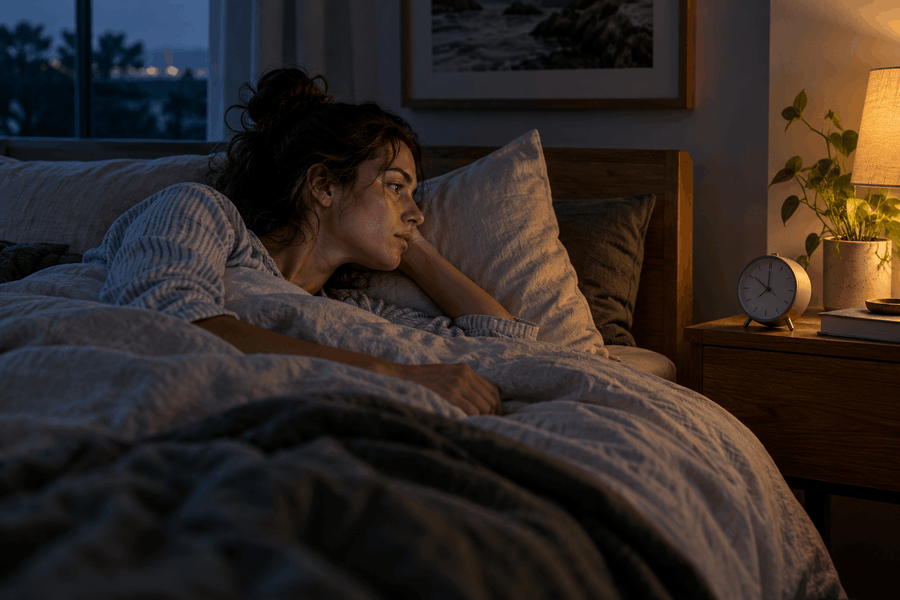
Did you know that adjusting when you eat can help you sleep better? New research shows that eating earlier in the evening can help you fall asleep faster, stay asleep longer, and feel more refreshed in the morning.
Why Late Meals Disrupt Sleep
Eating close to bedtime can interfere with your body’s natural rhythm. Your circadian rhythm controls your sleep and wake cycles, and it works best when your routines are consistent. A 2024 study in PLOS ONE by Yan and colleagues found that people who ate dinner later had poorer sleep quality. They experienced more disturbances during the night and took longer to fall asleep. This highlights the connection between when you eat and how well you sleep.
One possible reason is that digestion activates your body at a time when it should be winding down. Late eating increases body temperature and delays melatonin release. These changes make it harder to reach deep, restorative stages of sleep.
How Timing Affects Sleep Efficiency
A 2023 study published in Dietetics by Yasuda and colleagues looked at the gap between dinner and bedtime in a group of young adults. The study found that those who ate within three hours of going to bed took longer to fall asleep and had lower sleep efficiency. This means they spent more time awake during the night, even if they were in bed for a full eight hours.
What Happens When You Eat Earlier
A clinical trial published in Nature and Science of Sleep by Duan and colleagues tested how dinner timing affects sleep structure. Participants who ate five hours before going to bed had more deep sleep early in the night. When they ate just one hour before bed, they experienced less slow-wave sleep and more disrupted brainwave patterns. This suggests that an earlier dinner may support better sleep quality and recovery.
Best Time to Eat for Better Sleep
Try to finish your final meal of the day at least two to three hours before going to bed. This gives your body time to digest and allows your core body temperature to drop naturally, which supports the transition into restful sleep.
Making this one change can improve your sleep, boost your energy during the day, and support long-term health.