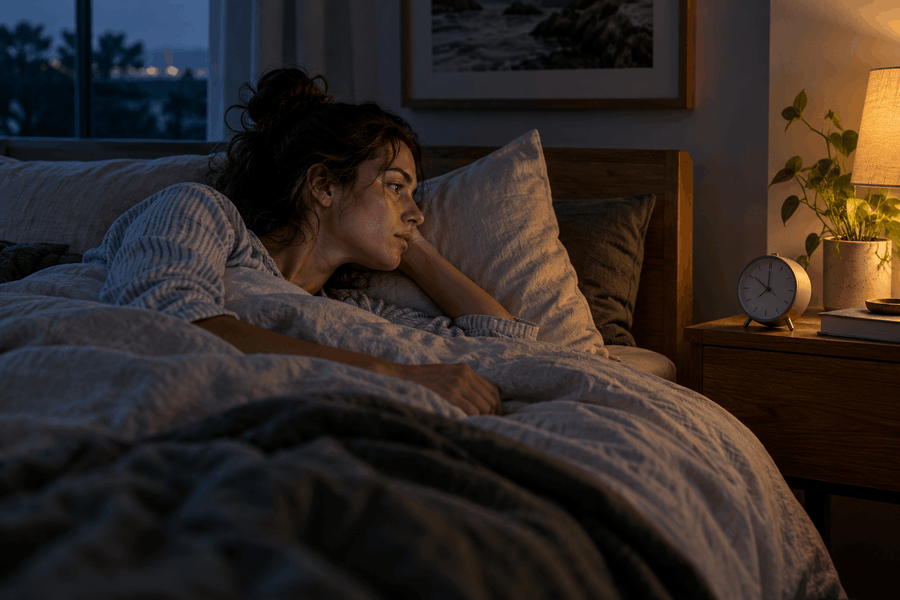
Why familiar rooms matter more than you think
A new room can look perfectly restful. The sheets are fresh, the space is quiet, and the mattress is supportive. Yet many people notice that the first night in a hotel or guest room feels unsettled. Sleep is lighter, dreams are less restorative, and the morning brings more fatigue.
This is a common experience known as the first-night effect. It reflects how the brain and body react when the environment is not your own. Instead of entering deep, stable sleep, your brain remains on partial alert, as if scanning for possible danger. Understanding this reaction is key if you want to improve rest when you are away from home.
The brain’s protective response
During sleep, the brain usually alternates between light and deep stages in balanced cycles. In an unfamiliar space, research shows that this balance shifts. One hemisphere of the brain stays more vigilant, monitoring the environment for changes in sound or light. This means that deep sleep becomes shallower and more fragmented.
A 2024 study confirmed that this response is not limited to the very first night. Even after non-consecutive nights in the same unfamiliar room, sleep quality remained reduced. People took longer to fall asleep, woke more often during the night, and spent less time in slow-wave sleep, which is essential for memory and recovery.
From an evolutionary perspective, this makes sense. In early human history, sleeping in a new environment often carried genuine risks. Staying partially alert increased the chance of survival. The modern consequence, however, is a restless night in a perfectly safe bedroom.
The environment factor: air, sound, and light
Beyond brain vigilance, the physical environment strongly shapes how restorative your sleep will be.
Air quality plays an important role. When windows remain shut and airflow is poor, carbon dioxide can rise to levels that disrupt sleep and impair next-day performance. In a controlled trial, researchers found that improved ventilation led to deeper sleep and better alertness the following morning .
Noise sensitivity also increases in new environments. Sounds that would fade into the background at home can trigger micro-arousals in a strange room. Earplugs or gentle white noise can reduce this sensitivity.
Light exposure is another hidden disruptor. Even a dim glow from a hallway or outside streetlamp can interfere with melatonin release. Since the brain is already on guard in new surroundings, it is more likely to register and react to light changes.
Practical ways to reduce disruption
Instead of hoping for a perfect night in an unfamiliar place, you can create conditions that bring comfort and consistency.
Carry familiarity with you
Bringing a pillowcase or small item from home provides a sensory anchor. The scent and feel tell your brain that you are safe, which softens the vigilance response.
Control the room environment
Ventilate the space whenever possible. A slightly open window or portable fan can help maintain fresher air through the night. Blackout curtains, eye masks, or even a towel under the door can reduce unwanted light.
Keep your rhythm steady
The bedtime routine you follow at home signals predictability to the body. Reading a few pages, stretching, or dimming lights at a regular time reinforces a sense of safety even in a different room.
Why it matters for your long-term health
Good sleep is not just about comfort. It supports memory, emotional regulation, recovery from physical training, and immune function. While one restless night away from home will not cause lasting harm, regular disruption from travel or new environments can accumulate. That is why learning to manage both brain vigilance and environmental triggers matters.
By creating familiarity and improving the room around you, you give your body the best chance to enter the deeper stages of sleep that truly restore energy and clarity.
References
Tamaki, M., Wang, Z., Lee, Y. S., Berwick, C., & Watanabe, T. (2024). First-Night Effect of sleep occurs over non-consecutive nights in unfamiliar and familiar environments. Sleep, 47(10), zsae179.
Strøm-Tejsen, P., Zukowska, D., Wargocki, P., & Wyon, D. P. (2021). Bedroom ventilation and its effect on sleep quality and next-day performance. Building and Environment, 190, 107537.