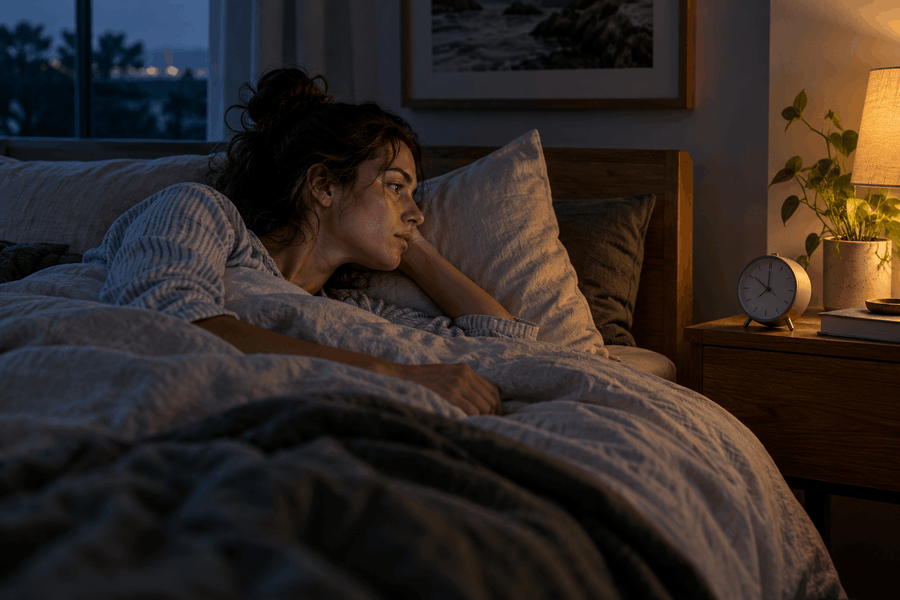
Evening coffee might not stop you falling asleep. But it still damages the way you sleep. That difference matters more than most people realise.
Many people can drink coffee at night and drift off without issues. But caffeine’s real impact is deeper and less obvious. Even when it feels like you're sleeping fine, caffeine can reduce deep sleep, fragment your sleep cycles, and leave you waking up unrefreshed.
This is why sleep quality, not just sleep quantity, should guide your caffeine habits.
Caffeine’s Real Target Is Sleep Architecture
Caffeine works by blocking adenosine, a key molecule that signals to the brain that it’s time to rest. As adenosine builds up through the day, it helps create sleep pressure, the natural urge to fall asleep.
When caffeine blocks this process, the urge to sleep weakens. But the bigger problem is what happens after you’ve already fallen asleep.
Sleep is made up of cycles that include light sleep, deep sleep, and REM. Deep sleep is when the brain and body recover most intensely. It supports muscle repair, hormone regulation, immune function, and brain detoxification. Even if you sleep a full eight hours, losing deep sleep can make your rest far less effective.
Caffeine affects these cycles directly. It reduces time in deep sleep and increases periods of wakefulness, even if you don’t remember waking up.
What the Latest Studies Reveal
In a 2025 clinical crossover trial, researchers gave healthy adults 400 mg of caffeine (the equivalent of two strong coffees) four hours before bed. The participants still managed to fall asleep. But compared to nights without caffeine, they:
-
Slept 54 minutes less
-
Took 14 minutes longer to fall asleep
-
Had a 10 percent drop in sleep efficiency
-
Spent less time in deep, slow-wave sleep
This shows caffeine’s influence is not just about sleep onset. It reaches into the brain’s recovery process and makes sleep less restorative.
An earlier meta-analysis reviewing 24 studies supported these findings. It found that caffeine consistently shortened total sleep time, reduced deep sleep stages, and increased time awake during the night. The effect was stronger the closer caffeine was consumed to bedtime.
This explains why you can fall asleep after a coffee yet still feel tired the next day. Your brain simply didn’t reach the deeper levels of sleep that help you feel restored.
You Don’t Have to Feel Wired for Sleep to Suffer
Not everyone feels jittery or overstimulated after a late coffee. Some people have faster caffeine metabolism or natural tolerance. But even in those people, the brain still responds to caffeine’s adenosine-blocking effect.
This is a crucial distinction. You might not feel the caffeine working anymore, but your sleep patterns are still being altered in ways that affect performance, focus, mood, and even immune strength.
Waking up groggy, craving more coffee, or feeling like you “slept but didn’t rest” are subtle signs of disrupted sleep architecture.
How Long Does Caffeine Stay in Your System?
Caffeine has a half-life of about five to six hours, but its effects can last even longer. That means a 2 PM coffee can still be in your bloodstream at bedtime, especially if your metabolism is slower due to genetics, stress, or certain medications.
This makes late-afternoon caffeine a hidden disruptor. You might not notice the impact until it starts showing up as poor focus, slower recovery, or rising morning fatigue.
Practical Adjustments That Protect Sleep
You don’t need to give up caffeine entirely. But shifting your habits can protect your sleep without sacrificing energy earlier in the day.
Set a caffeine cut-off.
Stop all caffeine by 2 PM to avoid spillover into your night.
Switch to low-caffeine or caffeine-free options
Decaf, rooibos, or herbal teas help taper stimulation.
Notice your mornings
If you need coffee just to feel “normal,” your sleep quality might be off.
Experiment with timing
Try a caffeine-free afternoon for one week and track how refreshed you feel.
Better Sleep Starts Before Bedtime
The quality of your sleep is shaped by what happens hours before your head hits the pillow. Caffeine has a long tail. Even if you’re sleeping through the night, it can blunt your brain’s ability to rest, recover, and recharge.
Understanding how caffeine alters your sleep is one of the simplest ways to improve energy, focus, and long-term health. You don’t have to give it up. You just need to work with its timing.